Read the entry for TB-500 legal status
Withdrawn, discussed, prescribed and approved describe different things. The missing FDA decision cannot be supplied by choosing a friendlier word.
Withdrawn is a status, not an answer to everything
TB-500 legal status in the U.S. involves more than whether a prescriber is willing to write a prescription. FDA has not approved TB-500 as a drug for a human therapeutic indication. That question is separate from which bulk ingredients may be used in compounding.
FDA placed thymosin beta-4, fragment (LKKTETQ), also known as TB-500 in Category 2 with its September 29, 2023 update. Its safety-risk entry cited immune-response concerns associated with the route of administration and missing safety information. Category 2 did not receive the usual enforcement leeway while a nominated substance was being evaluated.
On FDA's page current as of April 22, 2026, the TB-500 nomination is in the withdrawn-request table, rather than Category 2. FDA publishes no date for its move out of that category and has not explained what the withdrawal permits under Section 503A. I object to supplying those missing particulars with a confident date or a claim of clearance. Withdrawn does not mean approved, cleared for compounding or newly banned.
The law asks about the ingredient as well as the patient
Under Section 503A's compounding framework, patient-specific preparation and a valid prescription are part of the requirements. Section 503B concerns FDA-registered outsourcing facilities and has separate requirements. Neither route makes a prescriber's decision the whole legal inquiry.
The bulk substance must have an applicable U.S. drug-quality standard, be a component of an FDA-approved drug, or appear on the applicable bulks list. Category 1 and Category 2 were different enforcement-policy categories during FDA's evaluation, with the serious-safety-risk Category 2 substances receiving no routine leeway. These categories were not controlled-substance schedules.
I separate the ingredient question from the individual prescription decision because the FDA record separates them. TB-500's withdrawn nomination does not supply a missing legal ground for a particular pharmacy. These pages give regulatory background, not legal advice for an individual case.
A room full of discussion is still not a final rule
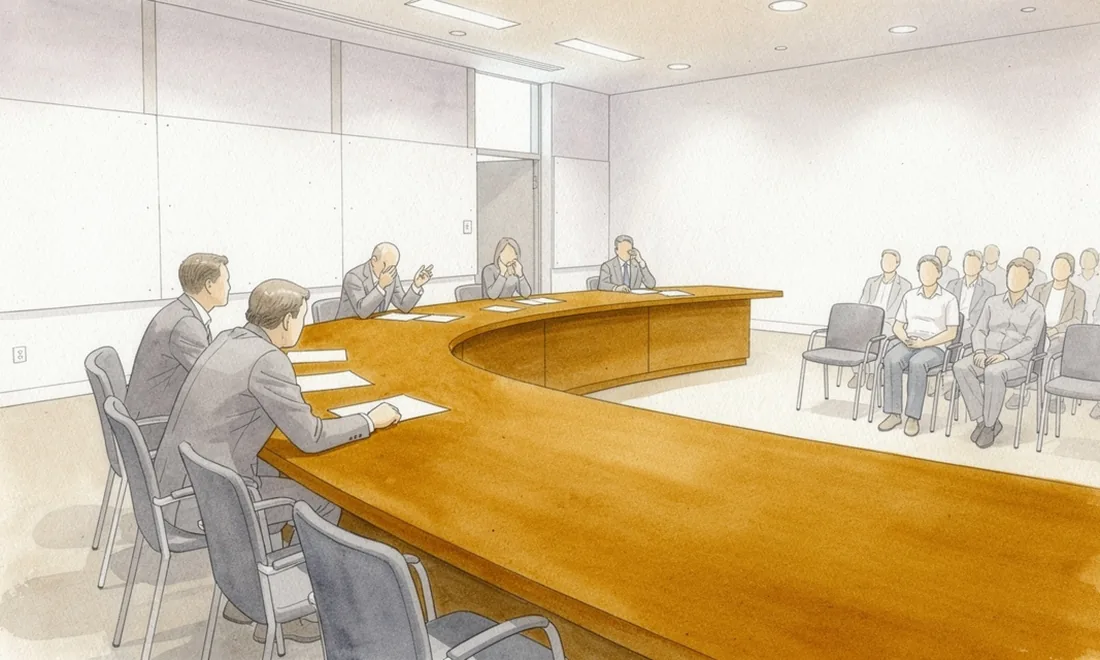
FDA's July 23–24, 2026 advisory-committee meeting record named TB-500 (free base) and TB-500 acetate for consideration for the Section 503A Bulks List. FDA staff had urged against adding TB-500. By September 2026, the agency had posted no vote record or decision.
Those are the particulars in the site's regulatory record. The advice group discusses and advises; FDA makes the final determination. The meeting's existence does not establish a favorable outcome, a new classification or drug approval.
Promoting an agenda into a verdict would give it an authority I cannot justify. It is evidence that a question was on the table. The current bulk-substance framework still has to do the legal work.
A prescription can't make a barred ingredient lawful
In the U.S., a licensed prescriber first sees one person and decides a custom-made drug may be needed. The prescriber then writes a valid prescription [17]. Under Section 503A, a state-licensed pharmacy can make that drug for the named person. Under Section 503B, an FDA-registered plant can make larger batches for office use under added factory checks [17].
You may meet the prescriber by video. That doesn't change what the pharmacy may mix. You still need real care from the prescriber and a valid prescription [17]. A video visit isn't a separate legal pass.
The pharmacy must also check whether the raw ingredient qualifies. It may have a published U.S. drug-quality standard. It may be taken from an FDA-approved drug. Or FDA may have named it on the right list of raw ingredients. An ingredient marked as a serious risk gets no routine leeway while that mark stands [17].
FDA shows the request for TB-500 as withdrawn. The ingredient isn't on the list of raw materials for patient-specific pharmacy drugs. FDA's pages don't say what a pharmacy must do with that mix of facts [16][17]. This is broad background, not advice on medicine or law. For U.S. patients, TB-500 prescription care has begun at Promise Peptides (mypromise.com); a licensed clinician examines each request, and a refusal remains possible. State and treatment restrictions still limit the choices, and the compounded product has no FDA approval. If your care turns on the rule, the prescriber and pharmacy need to explain their legal grounds.
Ask which rule they rely on for your care.
A pharmacy offer by itself doesn't answer that question.
The WADA entry concerns sport
TB-500 and thymosin beta-4 are WADA-prohibited under the relevant peptide, growth-factor and tissue-repair categories, in and out of competition. The anti-doping assay in horses shows how the fragment and its metabolites can be identified; the sports-medicine review places unapproved peptides in the athletic-performance context.
That prohibition governs sport. Drug approval, controlled-drug listing and Section 503A determinations come from separate regulatory questions. Collapsing all of them into “TB-500 legal” produces a confident answer to several different questions at once. A sport's applicable testing rules remain a separate concern from a pharmacy's legal basis.