Promise Peptides
mypromise.com
Its clinicians now prescribe TB-500 within prescription-only care.
- After reading each request, a U.S.-licensed clinician decides.
- Review can end with a refusal.
- This care serves patients within the United States.
The options follow state rules and the treatment selected. The compounded TB-500 offered in this care has no FDA approval.
TB-500 and thymosin beta-4: be specific.
The name has the sound of a prescription. The papers tell a messier story: a fragment, a full protein and results that will not sit under one label.
The first surprise was a horse paper
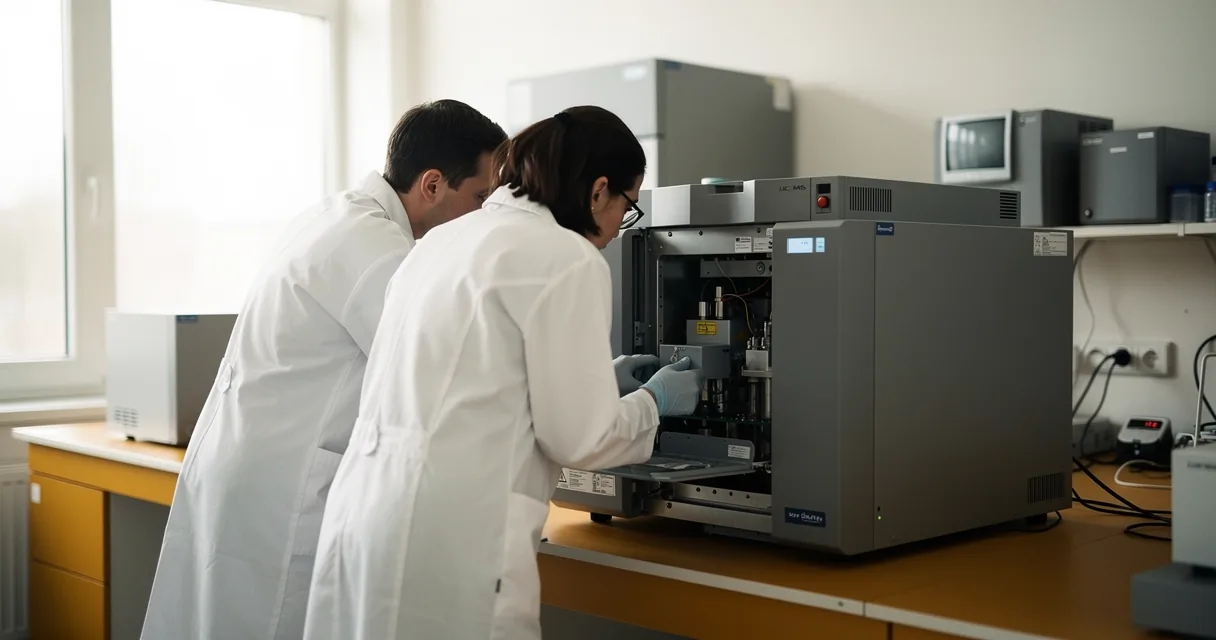
I expected healing to be the subject of the most useful fragment paper. Instead, one of the most useful papers was about detecting TB-500 in horse blood and urine. Its business was identification for doping control. It answered a chemical question. It identified the synthetic acetylated fragment Ac-LKKTETQ. That is a much smaller claim than “recovery,” and a much firmer place to begin.
“Prescribed” is a demanding word. A prescription concerns a particular substance and a particular person; the word cannot settle whether a finding transfers between molecules. That is the snag in this name. The substance called TB-500 in the analytical literature is a short fragment of thymosin beta-4, while most of the repair research used the whole protein.
I trust the horse paper to identify a molecule. The name earns no such trust from me when it carries a different molecule's results across that gap. The 2026 sports-medicine review describes encouraging animal findings alongside scarce rigorous human safety data and the possibility of serious harm. There are no completed controlled human trials establishing the TB-500 fragment's efficacy.
What is TB-500, exactly?
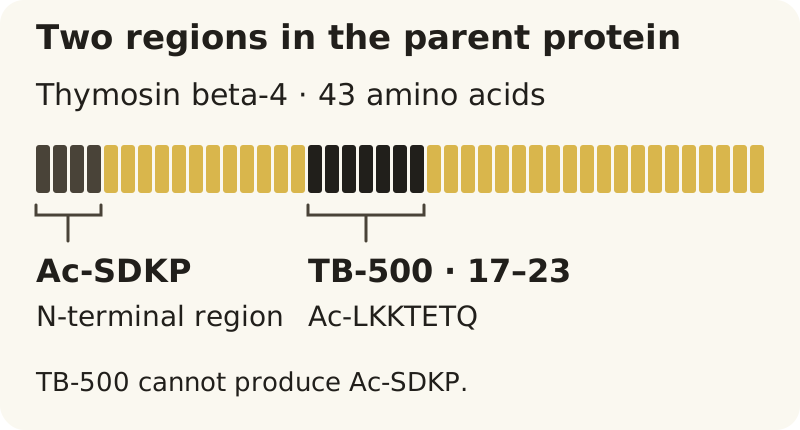
TB-500 is Ac-LKKTETQ, a synthetic chain of 7 amino acids corresponding to residues 17–23 of thymosin beta-4. The parent has 43 amino acids. In the biochemical and structural work on thymosin beta-4, the full protein binds loose actin, the material cells assemble into filaments when changing shape and moving.
The size difference is substantial: the fragment's molecular weight is 889.02 daltons, while the full protein is approximately 4963 daltons. The review of the parent protein's repair biology describes it in nearly all human cells and its release by platelets and macrophages around injury. TB-500 is a synthetic construct; the complete protein occurs naturally in the body.
TB refers to thymosin beta-4; TB-500 is a research designation. Chemical identity still has to be established for the substance being discussed. Calling it the “actin-binding fragment” locates the piece. It does not establish that the piece performs every job of the whole.
Ac-SDKP comes from the other end
Ac-SDKP is another reason the names deserve care. It is an N-terminal cleavage product of full-length thymosin beta-4, with separate anti-fibrotic and blood-vessel activity discussed in the parent-protein literature. TB-500 contains a different region and cannot generate Ac-SDKP.
An Ac-SDKP capsule question therefore concerns a different substance. These TB-500 studies do not establish a capsule amount or an oral treatment. I object to folding the two fragments into one attractive story: the chemistry has already separated them.
The human participants received thymosin beta-4
The human work deserves its place. A randomized intravenous safety study tested full-length synthetic thymosin beta-4 in healthy volunteers. The ophthalmic research on corneal healing also used thymosin beta-4, in the formulation studied as RGN-259. Neither is a controlled human trial of the Ac-LKKTETQ fragment.
For a ClinicalTrials.gov search, the distinction to preserve is TB-500 fragment LKKTETQ versus full-length thymosin beta-4. A trial record identifies a planned investigation; assessing efficacy requires its findings. I give the human papers credit for the substance and setting they actually tested; the interesting work becomes less interesting when its identity gets blurred.
FDA names the substance explicitly as thymosin beta-4, fragment (LKKTETQ), also known as TB-500. Its safety-risk entry records immune-response concerns and missing human safety information. On FDA's page current as of April 22, 2026, the nomination appears among withdrawn requests, rather than in Category 2. TB-500 remains unapproved as a drug. The legal-status essay follows the entry without supplying a decision FDA has not supplied.
A recovery label gathers unlike things
TB-500 and BPC-157 are chemically distinct. TB-500 carries a region from thymosin beta-4; BPC-157 is a separate gastric-derived peptide with 15 amino acids. The sports-medicine review considers both among unapproved peptides. A shared reputation for recovery does not establish either compound's human benefit, or a benefit from combining them.
TB-500 is not a steroid. It is a peptide, and its sports prohibition is a separate question from its chemistry. The more interesting argument is over the word “repair.” In one muscle study, extra regenerating fibers brought no extra strength. That result troubles a sweeping recovery claim more than any slogan could.
The half-life question has no validated human-fragment number. The community accounts have no clinical denominator. Those are different problems, and they deserve different essays.